

Designer and Artificial Intelligence: How to Create a Bedspread for a Bedroom — A Real Case Study
25.06.2026
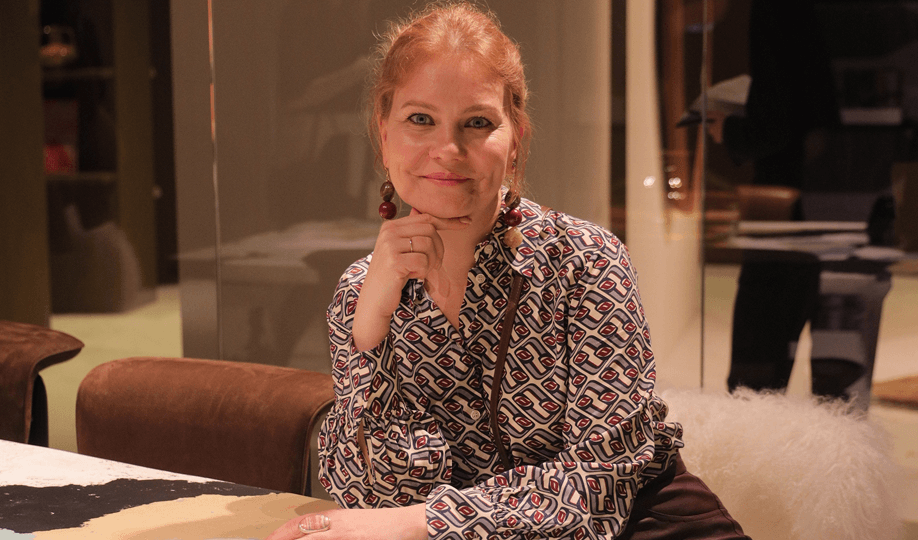
For the past two years, everyone has been discussing artificial intelligence in interior design. Some admire its capabilities, others fear that AI will replace designers and decorators.
I'm calm about artificial intelligence. For me, it's not a competitor.
Recently, I used AI to develop the textile design for a bedroom and decided to show the entire process — from idea to the realization of a designer bedspread.
Step One. The Original Bedroom Interior
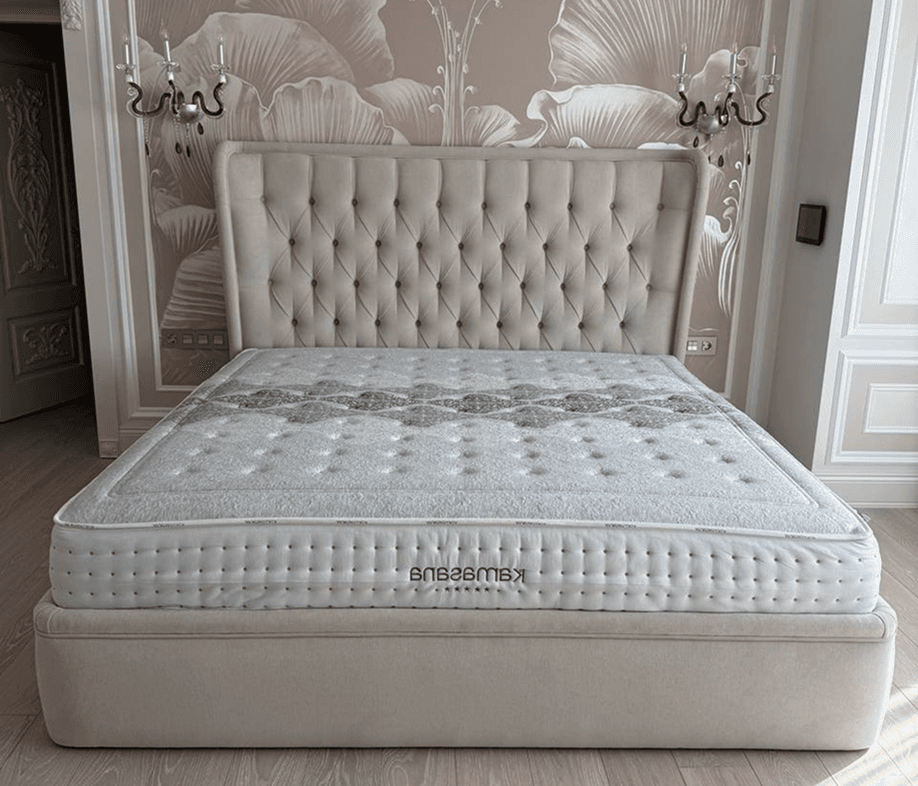
We were faced with a beautiful bedroom in a complex nuanced color palette.
A light bed with a tall soft headboard, decorative panel behind the headboard, light walls, and burgundy accents in the chandelier and sconces.
The interior already looked complete, but we wanted to add more expressiveness and bring the space together into a single composition.
The idea arose to create a custom bedspread for the bedroom with burgundy accents that echo the color of the light fixtures.
Step Two. Using Artificial Intelligence in Design
Instead of lengthy sketches, I uploaded a photo of the interior into an AI program and set the task: to create a visualization of a bedspread for the bedroom.
What the Textile Designer Saw
I saw much more. I immediately understood: - what thickness the bedspread filling should be - how the quilting would work on a large area - where decorative elements would look expensive and where they would look cheap - what proportions of burgundy inserts would be harmonious - how the fabric would behave after dry cleaning - what materials would retain their shape after several years of use - what bedspread tailoring technologies would deliver flawless results
Within minutes, the system produced an image of the future textile design.
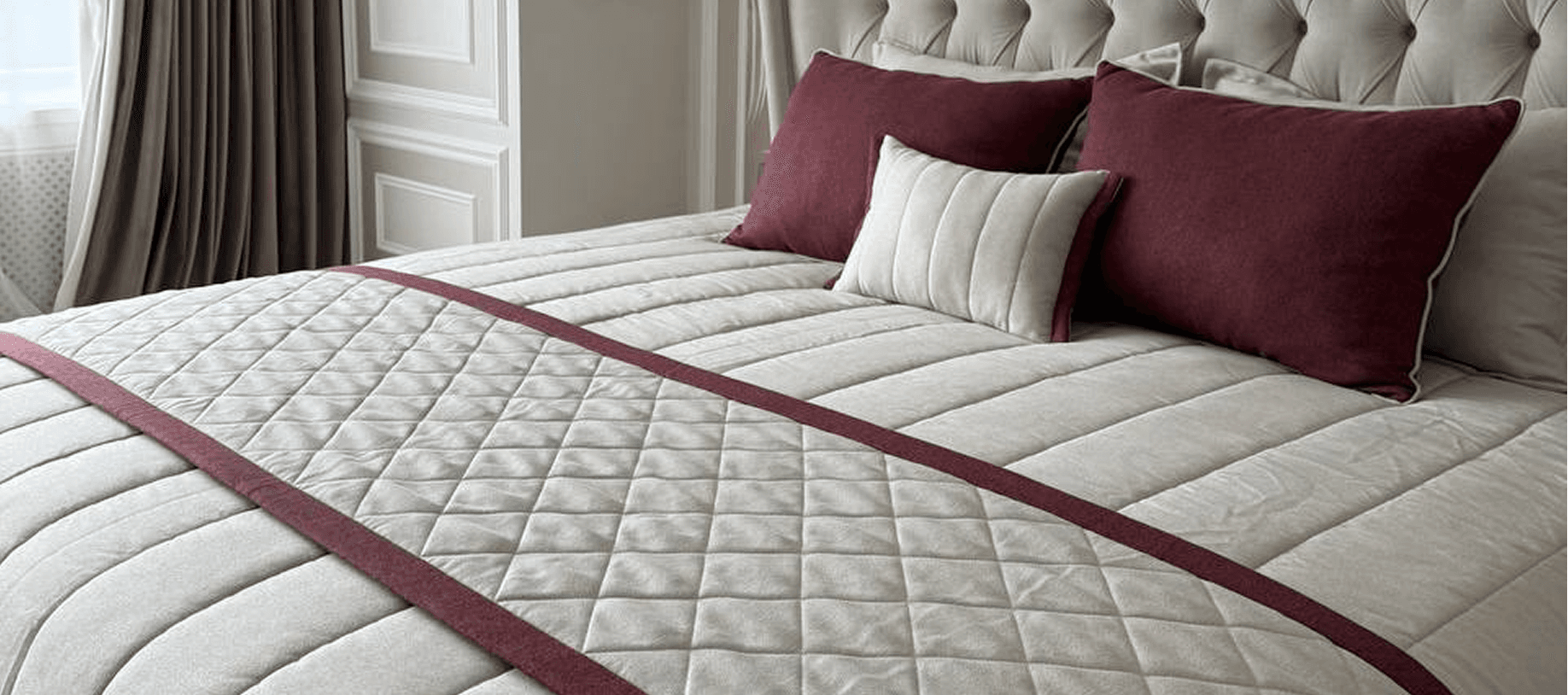
The picture showed a bedspread in the right color palette, with decorative burgundy elements and pillows. At first glance, the result looked convincing. But this is exactly where the difference between artificial intelligence and a professional interior designer becomes apparent.
What Artificial Intelligence Saw: - colors - form - composition
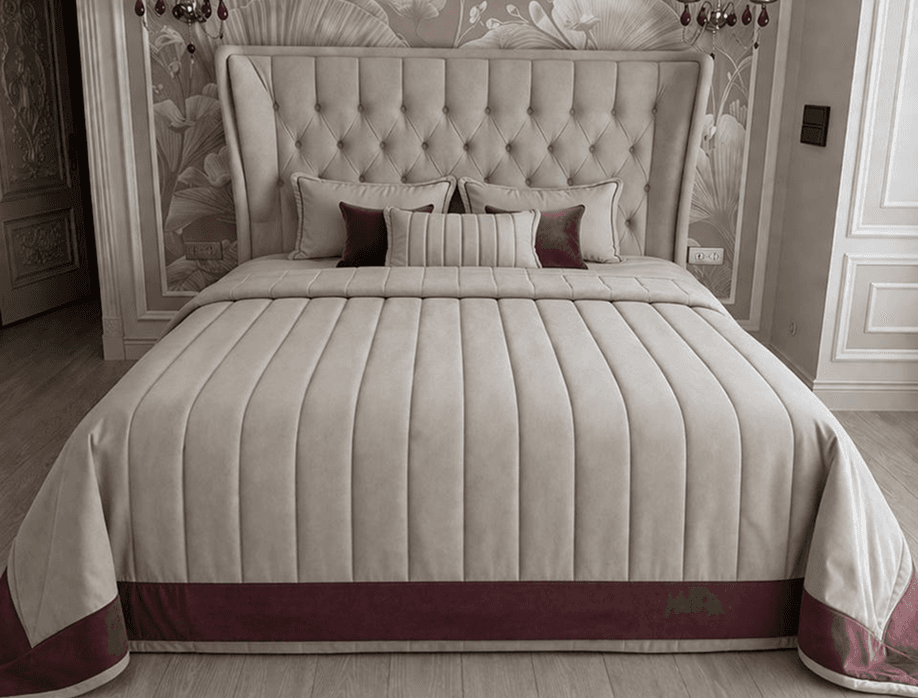
The most important thing — I saw that the visualization needed refinement. Because a beautiful picture and a quality textile product are not the same thing.
Step Three. Production of the Designer Bedspread
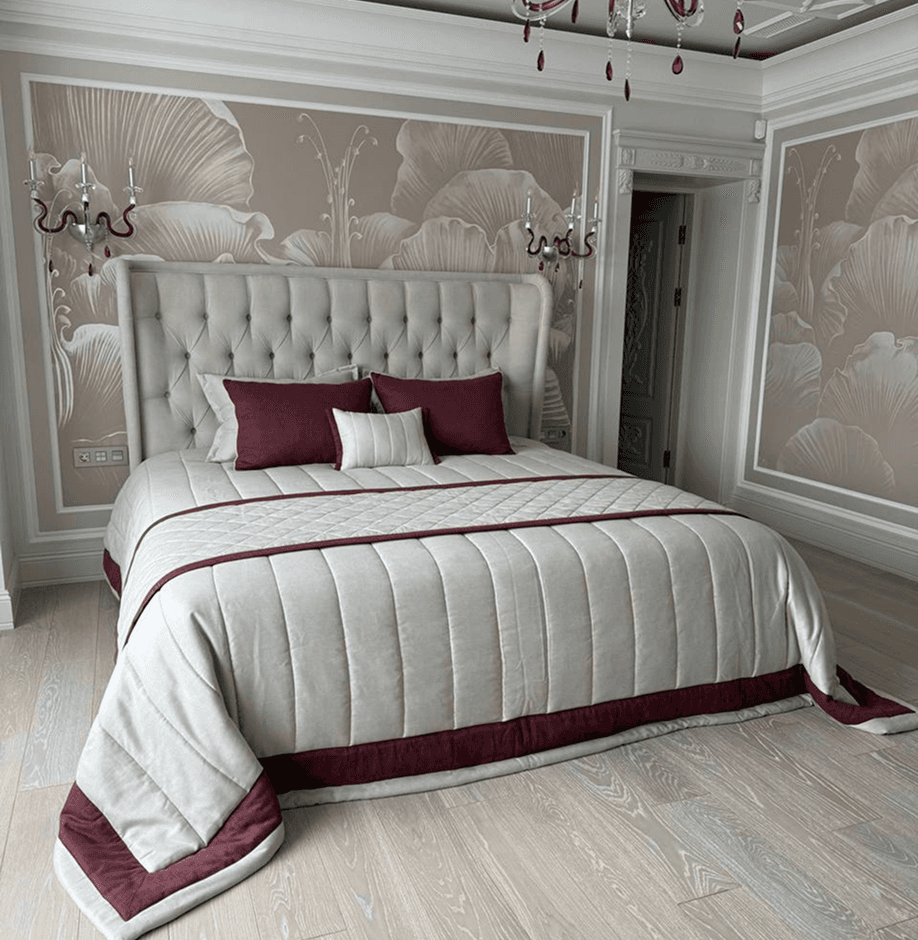
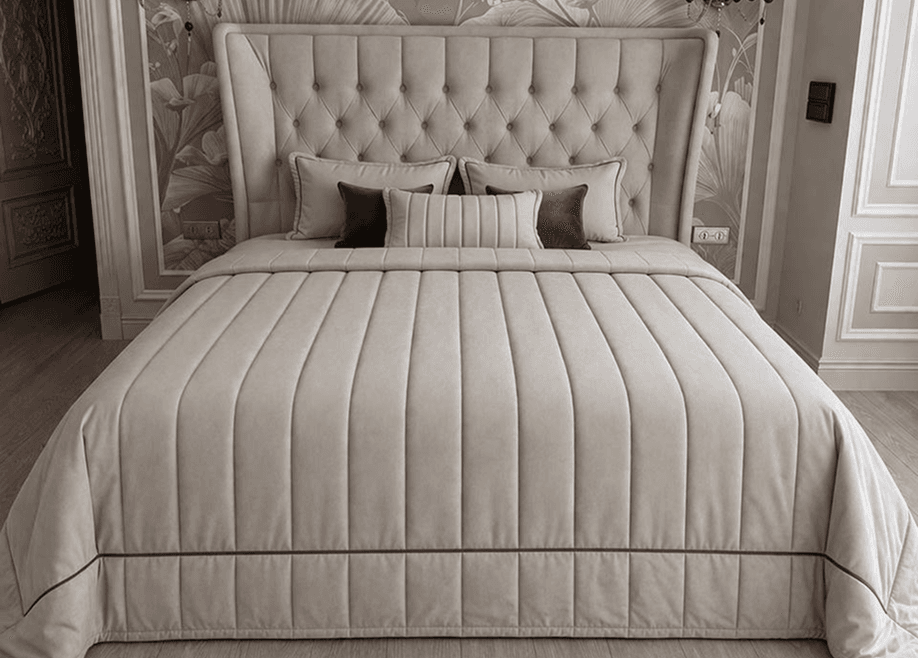
After analyzing the visualization, the work began that artificial intelligence cannot do: - selecting fabrics for the bedspread - developing the product construction - calculating material consumption - working out tailoring technology - choosing the filling - creating the quilting pattern - making samples - quality control during sewing
The result was a real designer bedspread created by my workshop. And it's at this stage that it's especially interesting to compare the visualization with the finished product.
Who Was Better — the Designer or AI?
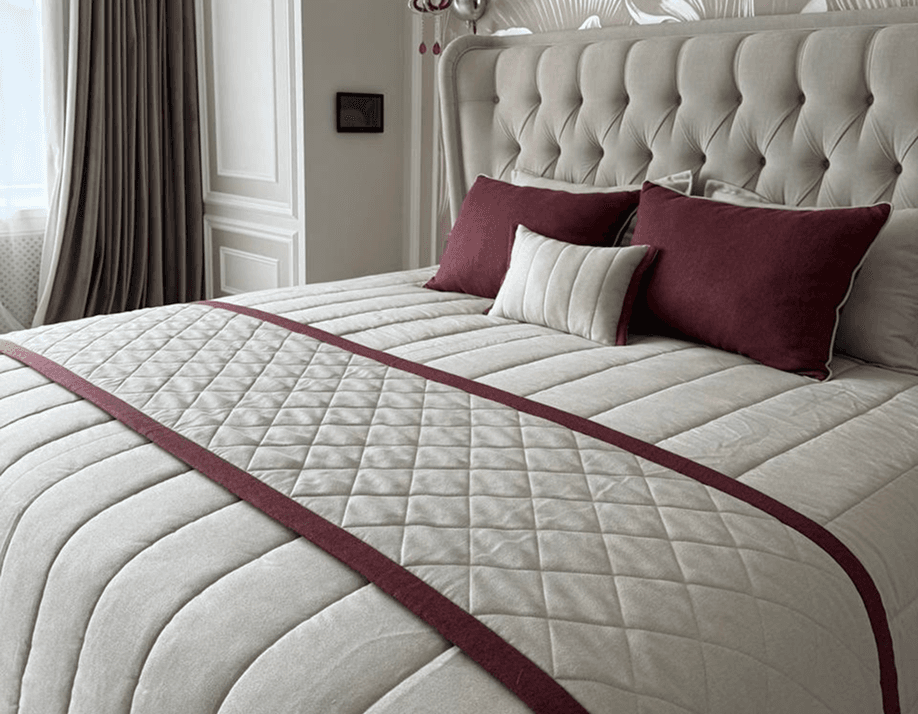
Honestly? Both. Artificial intelligence helped quickly test the idea and see the future image. It saved time on preliminary searches and interior visualization. But the finished bedspread turned out better than what AI proposed. Because behind it were experience, material knowledge, understanding of proportions, and twenty years of working with textiles.
The Future of Interior Design and Artificial Intelligence
I'm convinced that artificial intelligence won't replace a good interior designer. But a designer who knows how to work with AI will be significantly stronger than one who ignores new technologies. Today, AI can create dozens of design variations in minutes. But only a human can understand which one is truly worth bringing to life. So the future is not about designer versus AI. The future is about their collaboration. Because technology can offer solutions. But taste still remains a human quality. And for this collaboration to be truly effective, it's important for the designer to build competent work with AI.
Here are some practical recommendations: - use AI at the idea and concept stage, not as the final tool. It's great for generating options but requires professional refinement - formulate precise prompts. The more detailed your description of the task (colors, materials, style, mood), the more relevant the results you'll get - check the realism of solutions. Always ask yourself: can this be made, how will it behave in use, how practical is it - don't trust proportions without checking. AI often makes mistakes in scale and details, so it's important to double-check sizes and construction - use AI as a communication tool with clients. Visualizations help reach agreements faster and reduce the number of revisions - maintain your authorial style. Don't let the neural network dictate decisions — use it as an assistant, not a source of taste - combine AI with professional knowledge. It's this combination that gives the best results and sets a designer apart in the market.
You might also like
05.09.2025
Refresh Your Interior Without Renovation: How Textiles Change Everything
We explain how textiles transform an interior from simply beautiful to complete. With examples....
Read
19.09.2025
Ceiling or Wall-Mounted Curtain Rod? A Guide for Those Who Don't Want to Redo Things
How to choose the right curtain rod type: nuances of construction, design, and mounting...
Read
27.09.2025
Blinds That Don't Annoy
How solar protection systems became part of architecture — and why it's no longer about the office....
Read
08.10.2025
Natural Curtains: Luxury or a Waste of Money?
Why premium interiors are increasingly choosing something other than linen...
Read
05.04.2026
Evgenia Krivosheeva: About Me
Evgenia Krivosheeva — textile designer and custom curtain design for interiors...
Read
08.04.2026
How KriJe Works: Approach and Process
Evgenia Krivosheeva's professional approach to textile design: systematic work from measurement to installation, attention to detail, and textiles as part of interior architecture...
Read05.09.2025
Refresh Your Interior Without Renovation: How Textiles Change Everything
We explain how textiles transform an interior from simply beautiful to complete. With examples....
Read19.09.2025
Ceiling or Wall-Mounted Curtain Rod? A Guide for Those Who Don't Want to Redo Things
How to choose the right curtain rod type: nuances of construction, design, and mounting...
Read27.09.2025
Blinds That Don't Annoy
How solar protection systems became part of architecture — and why it's no longer about the office....
Read08.10.2025
Natural Curtains: Luxury or a Waste of Money?
Why premium interiors are increasingly choosing something other than linen...
Read05.04.2026
Evgenia Krivosheeva: About Me
Evgenia Krivosheeva — textile designer and custom curtain design for interiors...
Read08.04.2026
How KriJe Works: Approach and Process
Evgenia Krivosheeva's professional approach to textile design: systematic work from measurement to installation, attention to detail, and textiles as part of interior architecture...
Read